
We were on BBC Radio London talking about Company Three
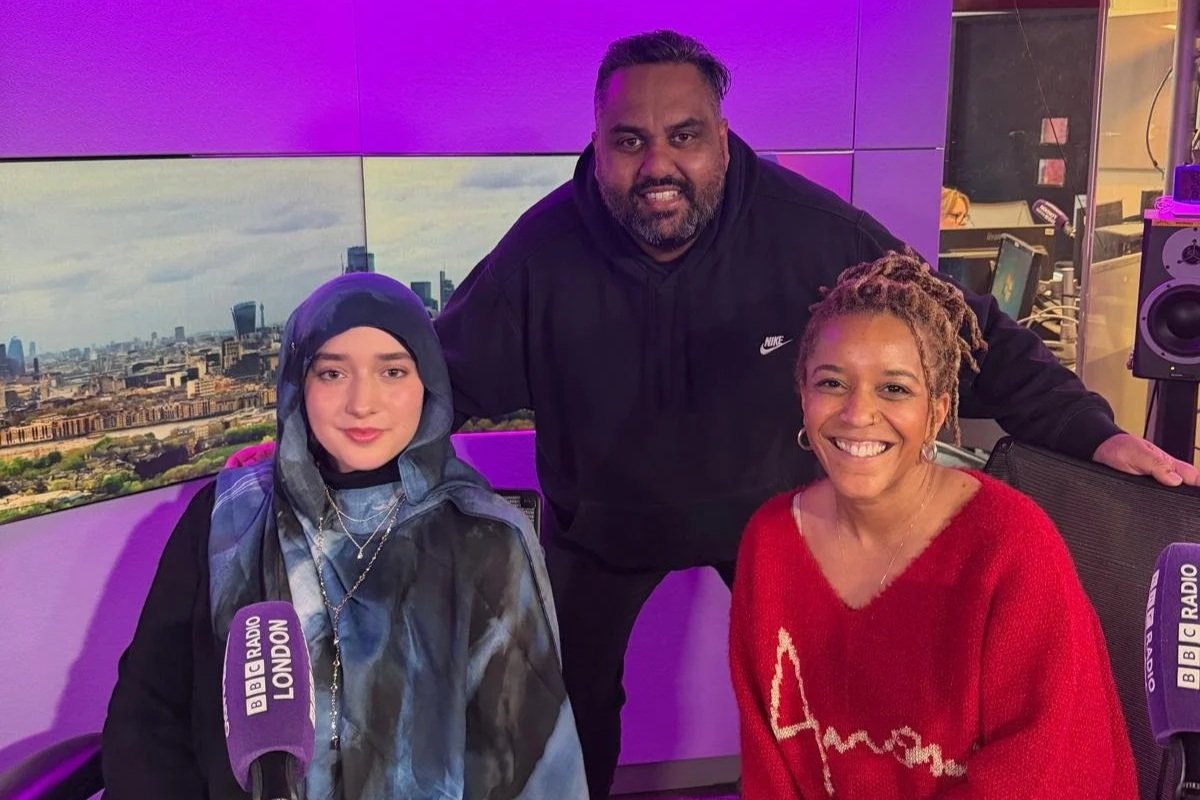
Shayma, Nuna and Aaron Paul at BBC Radio London studios
“[C3 Festivals] gives me the chance to take my own experiences and shape them into something meaningful while still being a part of a group that really supports and challenges each other to grow." - Shayma, C3 Member
Yesterday, we had the privilege of being on BBC Radio London with Aaron Paul ahead of C3 Festivals 2026.
Shayma, a member of Group Three, our group of oldest C3 members, shared an original poem and chatted with Aaron about her experience at Company Three. Our Artistic Director, Nuna Sandy, also joined to share a bit about Company Three’s history and what to expect from C3 Festivals this year.
You can listen to Nuna and Shayma on the radio below and find out more about C3 Festivals, our annual festival of creativity and culture, powered by youth voices and big ideas.
Alongside Shayma’s performance on BBC Radio London, she is also a cast member in C3 Festivals’ 24! and performed an original monologue as a part of C3’s monologue project Are You Listening?.
Shayma shares a bit more about the piece she wrote for BBC Radio London:
“I figured that since Company Three is a youth theatre company it would be best to write something about teenagers.
The inspiration behind this piece comes from the experience of being a teenager but not fully understanding your own identity yet. It reflects on the pressure of feeling like everyone else is confident and certain in who they are, while your still trying to figure yourself out.
A big part of the inspiration is the difficulty of expressing thoughts clearly. The metaphors like radio and train station, represent how ideas can feel clear in your head but become confusing or lost when you try to say them out loud. And I spoke about the radio cause this is being shared on the radio!
It's also influenced by the constant change that comes with growing up. The idea of being 'loose paper' shows how identity isn't fixed at this stage. There’s opinions, emotions and perspective that are always shifting which can make you feel unstable or unfinished.
And for the ending I wanted a more hopeful perspectice. So instead of seeing this confusion as a flaw, the piece suggest that it is actually part of becoming.”