
An interview with Unfinished Business Director Mariana
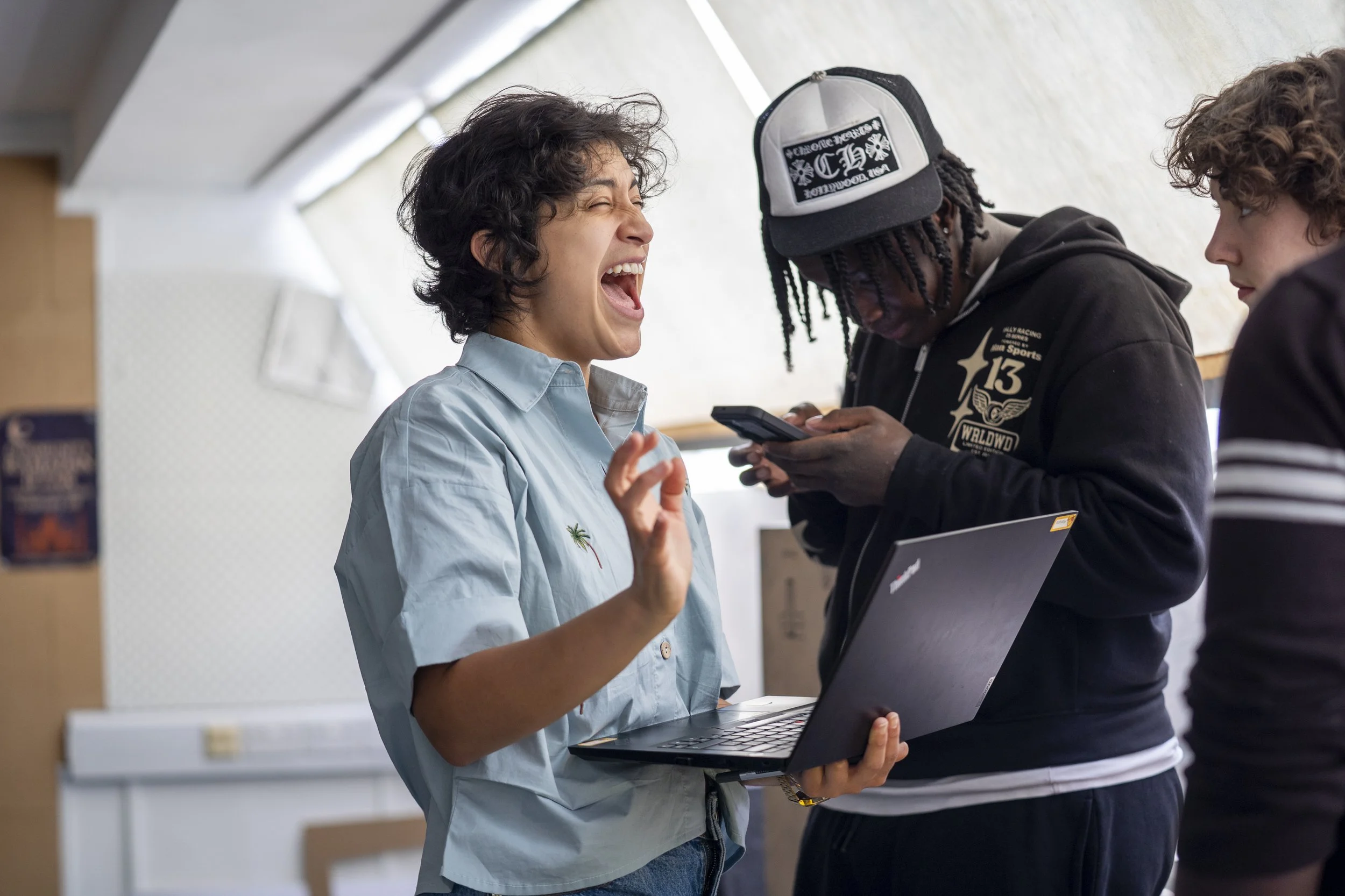
In the rehearsal room. Photography by Alicia Clarke
Core Company member, Effa, joined us in late May for work experience. As a part of her work experience, Effa spoke to the director of our upcoming flagship show, Mariana. Read on to find out more about Unfinished Business.
Effa: Okay. So, what is the play about, and what themes do you hope to explore?
Mariana: This play is about a group of teenagers that find something that transforms how they understand themselves, how they understand their relationship with others, and how they think about the choices that they make every day.
I want to talk about this sense of togetherness and collectiveness, and how maybe that can help us see through really difficult times. The show will ask the audience - how can we create or carve spaces for hope? This show will be interactive, so we will have audience participation, and we will also use live music and a loop pedal.
Effa: And what made you decide to write about this?
Mariana: For the last year or two I've been having a lot of questions about how to respond to the world that we're in right now. It feels incredibly challenging and bleak. Whether that's because of the climate crisis, war, or the fire of extremist views. How we engage with one another is more polarized, and I think there's less space for kindness and openness. I was interested in creating a show that could open up possibilities, despite all the difficult things that we are living in. Joy, resistance and imagination can also be a political stance, like a way of saying “we're going to resist and we're going to try and think of new alternative possibilities”.
When I first pitched it to people at C3, I was mainly focusing about all the what-ifs and all of our regrets. If you could change something in your life, what could you change? I think that was like a massive quest, and so we slowly distilled that idea to maybe make it more about choices we make and why.
Effa: Who are the characters? What do they represent, what inspired them?
Mariana : The play is divided into two different universes and time periods. So we have a world in the future, it's kind of dystopic. It was inspired by conversations we had in the rehearsal room, about COVID and how people coped with it. There was something about the isolation that really resonated with me and Alphonso when thinking of this future world.
In this world, they encounter events and characters from the past that allow them toreflect on themselves, and the things that they care about. Throughout the devising process we've been looking at regrets and choices. The characters are definitely inspired by the young people, and they are like fictionalized autobiographical stories; they have elements of fiction, but it's their stories.
Effa: Next question is, it's sort of similar, Who inspires your work, like, you know, people like playwrights or directors or screenwriters, those kind of people?
Mariana: I have different inspirations. I really really enjoy the work by a company called Told By an Idiot, so it's a clowning company, and they do work that is incredibly silly. I think it's responsive, and it makes you think a lot. I really like their work. I also really, really like a company from Bolivia called El Teatro de Los Andes. What I find really interesting about them is that they take a classic story or a universal story and how it speaks to their current historical, political, and cultural climate. One main influence for me as a maker comes from my time at university. There was a really strong belief that theater is not just entertainment, but it has a purpose. Theater poses questions, uncomfortable questions, and that for me has been an important part of my work.
Effa: And what inspires you when you write?
Mariana: That's a really difficult one. I really struggle writing, you know. I find inspiration when watching people. For example, when I'm watching a scene, or when I'm watching something really exciting, that's where I find inspiration. It needs to come from a live stimuli in order for me to be like, okay, I'm gonna write.
Effa: The next question we've kind of answered. How did you, how did you turn your ideas into writing? Yeah, you might not have anything else to add from that.
Mariana: In order to write, I need to talk a lot. So, poor Alphonso has heard me for hours and hours, I talk to him nonstop. I think, theater becomes really interesting, when it becomes this exercise of collectiveness, thinking and making. I throw ideas at him, then he asks questions, and in that dialog I start having a little bit more clarity.